
WORMHALL

Phantomdrive

Started by glue - 1.5 months ago
No. 50 [copy]
Phantomdrive is a completely open source USB drive that appears as an 8 GB drive when first plugged in. There’s no way for the OS to detect the remainder of the disk. If the user edits a plaintext file on the disk with the contents password:PUTYOURPASSWORDHERE, it unmounts itself and remounts the second hidden section and AES-256 encrypts/decrypts in place.

https://rootkitlabs.com/2026/06/22/I%27m-Building-a-Secure-USB-Drive/
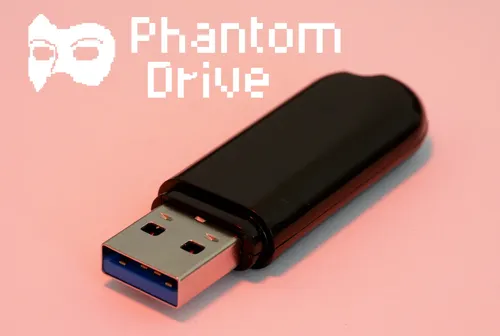
Post Image
No. 59 [copy]
Why not just create a LUKS partition
No. 60 [copy]
LUKS operates entirely at the software/OS level. The OS has to know the partition exists, and you have to use a decryption tool (like cryptsetup) to unlock it. You cannot unlock a standard LUKS partition by simply typing a password into a Notepad file.

A standard LUKS partition is loudly and visibly encrypted. It contains a "LUKS header" that explicitly tells the operating system, forensic tools, and anyone inspecting the drive: "This is an encrypted partition."

The Phantomdrive approach: The OS only sees a standard, unencrypted 8GB flash drive. The hardware controller simply refuses to tell the OS that the rest of the storage (the SD card inside the epoxy) even exists until the trigger phrase is caught.

To open a LUKS partition, you need a Linux environment. To open a VeraCrypt hidden volume, you need to download and install VeraCrypt on the host machine—which leaves forensic traces and might not be possible on locked-down computers (like a library computer, a work laptop, or a police terminal).

The Phantomdrive approach: Because the cryptography and the mounting are handled entirely by the USB's internal chip, it requires absolutely no software on the host machine. It will work on Windows, macOS, Linux, Android, or an iPad.
No. 63 [copy]
Oh yeah, so some stealthy storage device. Cool
No. 64 [copy]
>>63
Yeah, and you can buy one at their store

Log in to reply.